Convention and Trade Shows

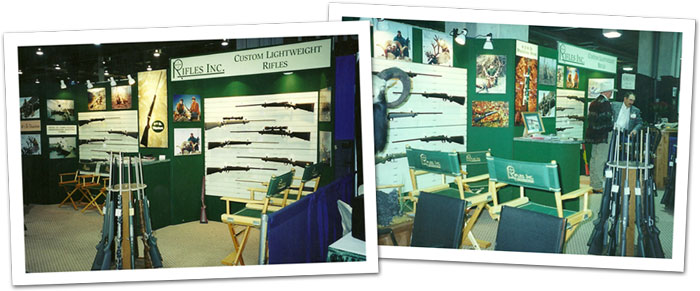
Dallas Safari Club
January 11 - 14, 2024
Kay Bailey
Convention Center
Dallas, TX
This article from Ron Spomer is a nice read. Kinda a blast from the past – I built that rifle probably 15 plus years ago. Ron has a great way with words and I know he’s a gun writer who spends lots of time out in the field. The 280 Ackley caliber seems to get overlooked with the newest, hotrod calibers. But, I’m seeing renewed interest in it with the availability of factory ammo and brass. It is a mid-range caliber with mild recoil. Let me know if I can answer any questions.
Good hunting, Lex
Journal of Mountain Hunting - Ron Spomer
Rifles Inc Builds Your Perfect Rifle
A Quarter Century of Building Lightweight Custom Rifles
A Word from Lex
Continued Accuracy Problems?
After I've checked the scope mounts (see previous article listed below) – I would then check scope. If the mounts and the scope check out – then I would check ammo.
FACTORY AMMO - I like most of the premium factory ammunitions available today. I shoot a lot of the Federal Premium in my rifles – mainly because of the selection of bullets and the consistency of the ammo. If I know a customer wants to shoot factory ammunition in their rifle – I will guide them towards one of the calibers where there is a larger selection of loads and bullets. For example 300 Win Mag – there are at least 15 different 180 grain bullet loads available. Not every rifle is going to like the same bullet or same ammunition manufacturer. And then there are some loads that just aren't going to shoot in any rifle. Before going further down the road on diagnostics – I will try 3 different factory loads. I don't mean try across the whole scale of bullets. But, back to my example of 300 Win Mag. – I would stick with the middle of the line as far as weight grain bullet – meaning I don't want to try too far to either extreme (meaning I don't want to try a 150 gr or 225 gr to check accuracy). So, I would try a 180 gr. Barnes TTSX, a Nosler Partition or Nosler Accubond.
HANDLOADS - Okay – you handload and want to try to shoot handloads. First, I'm not going to teach you how to handload in this article. There are a lot of variables in handloading and I see a lot of examples of bad handloads – believe me. If you know how to handload – it is an enjoyable hobby. It is not going to save you money or time – you have to like to do it. The advantage of handloading are now your caliber selections are almost limitless – if one of the new hotrod calibers catches your interest – you don't have to wait and see if the factory ammunition guys are going to get on board. Just sign me up for that new 6.5x284! The other advantage is accuracy and velocity are tailored to your rifle and specific shooting goal. You can develop a load with a light target type bullet for shooting metal plates at long ranges and then switch to another load with a heavier constructed hunting bullet for an upcoming elk hunt. Why am I mentioning handloads and accuracy problems in the same article? If you are shooting a handload and your rifle is not shooting – please try factory ammunition in the rifle. I have seen and heard numerous handloading problems – double check that your handloads are not the problem.
On both factory loads and handloads – I first look for a rifle to "like" a specific bullet. This is typically the 1st variable in finding an accurate load. Find the bullet your rifle likes. Then, experiment with powders, charges and seating depths. Changing primers is my last variable. A different primer is probably not going to fix or miraculously fine tune your handload.
Okay – yes, there is a third option. You want all the advantages of handloading but you don't handload. Yes, I can develop the load for you and then you can take that recipe to a company such as Superior Ammunition and they can make your handloads for you.
Good shooting,

Printable Articles of Interest
Accuracy Problems? Check Scope Mounts First!